celery is a nutritious vegetable rich in dietary fiber, vitamins and minera...
2024-11-01 804 Celery preserves fresh methods celery preservation freshness moisture nutrition

celery is a nutritious vegetable rich in dietary fiber, vitamins and minerals, among others. However, celery is prone to water loss and wilting, and if not stored properly, it will quickly lose its freshness. Here are a few effective ways to keep celery fresh.
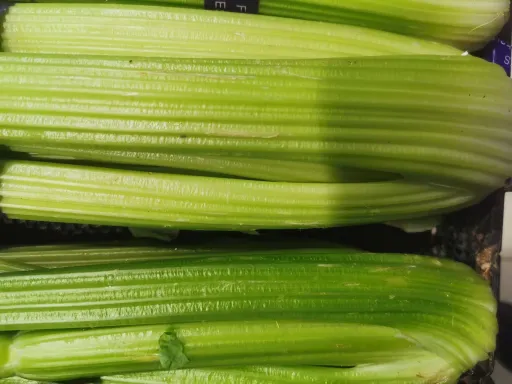
this is a simple and commonly used method. First, clean the surface of the celery from dirt and impurities, but do not overwash it, as too much moisture can easily cause celery to rot. Then, gently dry the moisture from the surface of the celery with a clean kitchen paper towel. Next, take a sheet of plastic wrap and wrap the celery tightly from start to finish. Plastic wrap can effectively reduce the contact between celery and air and prevent moisture from evaporating too quickly. When wrapping, try to expel the air in the plastic wrap so that the plastic wrap adheres to the celery. If possible, you can put the wrapped celery in a fresh-keeping bag and put it in the refrigerator freezer. In this way, celery can maintain good freshness for about a week.
plastic wrap and bags are good preservation tools in this process. The plastic wrap has good sealing properties, which can fit the celery tightly and block the outside air. Fresh-keeping bags can further provide a relatively closed environment and facilitate the organization and storage of wrapped celery.
it should be noted that before wrapping celery, you must ensure that the surface of the celery is dry, even if there is a little moisture left, bacteria may grow in the environment wrapped in plastic wrap, causing the celery to rot. This is because moisture is an important condition for bacterial growth, and the relatively closed environment formed by plastic wrap provides a breeding ground for bacterial growth. In addition, when putting it in the refrigerator refrigerator, pay attention to whether the temperature setting of the refrigerator is appropriate, the temperature of the refrigerator compartment is generally kept at 2-4 °C, the temperature is too high will accelerate the deterioration of celery, and too low may frostbite celery. When the temperature is too high, celery's cellular respiration will be enhanced, consuming more nutrients, and also accelerating water dispersion and microbial growth. When the temperature is too low, the water inside the celery cells will freeze, and the ice crystals will destroy the cell structure, causing the celery to become soft and discolored, and nutrients will be lost.
prepare some paper with good water absorption, such as newspapers or kitchen blotting paper. Sort out the celery first and remove the withered yellow or damaged leaves. Then, wrap the celery in layers with paper. The function of paper is to absorb excess moisture emitted by celery and maintain its dry environment. Each pack of paper can be pressed slightly to make the paper fit better with the celery. Once wrapped, you can place it in a cool and ventilated place or in the crisper drawer of the refrigerator. This method allows celery to be stored for several days, and the taste and nutrition of celery will not be lost much.
Here, newspapers and kitchen blotting paper are the main tools. Newspaper is less expensive and readily available, and its fiber structure is able to absorb a certain amount of moisture. Kitchen absorbent paper is more hygienic, specially designed for the kitchen, has good water absorption and toughness, can wrap celery well and avoid celery being affected by external factors.
when using the paper wrap method to preserve celery, pay attention to the number of layers of paper. If the number of layers of paper is too small, it may not be able to fully absorb the moisture emitted by the celery, causing the celery to become damp; Too many layers of paper may affect the air permeability of celery, which is also not conducive to preservation. Generally speaking, 3-5 layers of paper are more suitable. In addition, the place where the celery is placed should be really cool and ventilated, and avoid direct sunlight, because the sun will raise the temperature of the celery, accelerate the evaporation and deterioration of water. The heat in the sunlight will promote the water in the celery cells to turn into water vapor and lose it faster, and the high temperature environment is conducive to the reproduction of microorganisms, which will cause celery to rot faster.
celery itself is an upright growing vegetable, and we can use this feature to preserve its freshness. Find a container with a certain depth that can hold water, such as a bucket or vase. Add an appropriate amount of clean water to the container and place the celery in the container upright, root side down. Make sure the roots of the celery are soaked in water so that the celery can absorb water through the roots and maintain a certain level of freshness. However, it is important to change the water in the container frequently to prevent it from becoming dirty and breeding bacteria. This method is suitable for storing celery for a short period of time, such as 1-2 days, if the time is too long, the celery leaves may still wilt.
For upright preservation, a bucket or vase is a key tool. The bucket has a large capacity and is suitable for storing more celery. The advantage of vases is their beautiful shape and often a certain transparency, which makes it easy to observe the state of the water and the condition of the celery roots.
when using the upright storage method, pay attention to the amount of water in the container. Water should not be too little, otherwise the celery roots will not be able to fully absorb water; But not too much so that the celery is not soaked too much and rots. Generally, it is better to cover the root of celery by 2-3 cm. Moreover, when changing the water, the movements should be gentle to avoid damaging the roots of the celery, because once the roots are damaged, the ability of the celery to absorb water will decrease, thus affecting the preservation effect. The roots are important organs for celery to absorb water and nutrients, and damage will disrupt its physiological functions, preventing celery from properly obtaining the water needed to maintain freshness, which in turn will cause celery to wither.
in cold storage, fresh-keeping bags and crisper boxes are essential tools. The crisper bag is soft and well-sealed, making it easy to wrap celery and reduce air contact. Crisper boxes are more sturdy and available in different sizes to make it easy to store celery in different sizes and prevent celery from being squeezed by other items in the refrigerator.
when refrigerating, pay attention to how the celery is cleaned. Try to avoid over-washing, as too much moisture residue can make celery more prone to spoilage during refrigeration. If you need to clean it, be sure to dry it thoroughly before placing it in a crisper bag or box. At the same time, it is necessary to regularly check whether there is water in the fresh-keeping bag or crisper box, and if there is, it should be cleaned up in time to prevent celery from being soaked in water. Too much moisture will put celery in a humid environment, which is easy to breed mold and other microorganisms, and will accelerate the decay of celery. In addition, during the refrigeration process, although the low temperature inhibits the growth of microorganisms and the physiological activities of celery, there will still be a certain degree of nutrient loss over time, such as vitamin C, which will gradually decrease.
if you want to preserve celery for a long time, you can try freezing it. First wash the celery, cut it into small pieces or minced pieces, and then blanch it with boiling water. The blanching time should not be too long, usually 1-2 minutes, so as to maintain the color and nutrition of celery. After blanching, quickly cool the celery in cold water and drain the water. Put the processed celery in a fresh-keeping bag or crisper box, expel the air as much as possible and put it in the freezer of the refrigerator. Frozen celery can be stored for several months, but frozen celery may taste slightly worse than fresh celery, making it more suitable for cooking soups or stews.
crisper bags and crisper boxes are also important tools when it comes to freezing. They prevent celery from being eroded by frost during freezing and effectively isolate external odors. At the same time, in order to blanch celery, you also need to use pots and colanders. The pot is used to blanch celery in hot water, and the colander is convenient for removing the celery from hot water and cooling it in cold water.
when freezing celery, pay attention to the time and temperature of blanching. Too long or too high a temperature will make celery soft and rotten, losing its taste and some of its nutrients. This is because the long-term effect of high temperature will damage the cell wall and cell membrane of celery cells, causing substances in the cells to flow out, resulting in poor celery texture. In addition, when putting it in a fresh-keeping bag or crisper-box, try to expel the air, as the air will cause the celery to oxidize during freezing and affect the quality. Oxidation will change the color of celery, such as yellowing and darkening, and will also make the celery flavor worse. Moreover, it is best not to thaw and freeze the frozen celery repeatedly before cooking, which will make the taste of celery worse. Repeated thawing and re-freezing will destroy the cell structure of celery, causing ice crystals in the cells to form and melt repeatedly, causing celery to become softer and lose its original crispy and tender taste.
as the storage time increases, celery undergoes a series of changes. First of all, in appearance, the leaves of celery will gradually turn yellow, wilt, and even become soft and rotten. This is because celery continues to lose water during preservation, cells lose turgor pressure, and at the same time, chlorophyll in the leaves decomposes, and the relative content of lutein and other pigments increases. The stems may become shriveled, fibrosis worsens, and lose their original crispy texture. From a nutritional point of view, vitamins (such as vitamin C, vitamins, etc.) and minerals in celery will gradually be lost. This is due to celery's own physiological activities and the action of microorganisms, which cause these nutrients to be consumed or broken down. In addition, after long-term storage, celery may develop an odor, which is a mixture of undesirable odors produced by microbial metabolism and special odors produced by celery's own components during the change process. If not stored properly, celery may also be contaminated with mold, bacteria and other microorganisms, mold, odor, etc., and celery can no longer be eaten at this time.
leafy vegetables (take spinach as an example)
spinach after long-term storage, the leaves will first become soft and wilted, and the color will change from bright green to dark green or yellow. This is because spinach leaves are thin, water evaporates quickly, and the chlorophyll in its cells is easily degraded during storage. Over time, water-stained spots may appear on the leaves, which is a sign that microorganisms are starting to infest. If the humidity of the storage environment is high, white hairs (mold) may also grow on the surface of the leaves. From a nutritional point of view, water-soluble vitamins such as folic acid and vitamin C in spinach will be lost in large quantities, and its antioxidant capacity will also decrease.
rhizomes (take carots as an example)
carrots are stored for a long time, the skin will gradually lose its luster and become rough. If it is preserved with mud, microorganisms in the soil may erode the skin of the carrot, causing it to appear dark spots or rotten spots. If left in a dry environment for a long time, carrots will become shriveled due to water dispersion, increase the degree of lignification, and become rough and stiff in taste. Nutritionally, although nutrients such as β-carotene in carrots are relatively stable, water loss will affect their overall nutritional value and taste to eat. If the storage environment has high humidity and suitable temperature, carrots are also easy to germinate, and the nutrients of carrots after germination will be transferred to the sprouts, resulting in a decrease in root nutrition, and may produce some harmful substances to the human body.
eggplant fruits (take tomatoes as an example)
tomatoes are stored for a long time, their skin will wrinkle and lose their original smoothness and fullness. If it is in a high temperature environment, tomatoes are easy to rot and become soft, and the internal flesh will be soft and juicy, because microorganisms decompose the organic matter in the fruit, and the fruit's own cell structure is destroyed. In a low-temperature environment, tomatoes may suffer from frostbite, local transparency or soft rot, and their flavor will change, and the original sweet and sour taste will be weakened, and even peculiar smells will appear. From a nutritional point of view, nutrients such as vitamin C decrease with longer shelf life, and harmful substances may also be produced during decay.
Through the above methods, we can choose the appropriate celery preservation method according to our own needs and actual situation, and at the same time understand the relevant knowledge of the preservation changes of other vegetables, so as to better ensure the freshness and food safety of vegetables.
標籤: Celery preserves fresh methods celery preservation freshness moisture nutrition
相關文章

celery is a nutritious vegetable rich in dietary fiber, vitamins and minera...
2024-11-01 804 Celery preserves fresh methods celery preservation freshness moisture nutrition

In the colorful world of ingredients, velvet antler mushrooms stand out wit...
2024-09-24 5.7K+ 鹿茸菇 nutrition 烹飪 鹿茸菇的做法大全家常

in the world of fruits, pomelo is a much-loved fruit. So in what season is...
2024-09-23 5.3K+ 柚子 食用 柚子什麽季節吃是應季