

1. Introductiondash cams play a crucial role in modern transportation, and...
The relationship and synergy between WDR, HDR, SDR and pixels in the dash cam
汽車
2024年12月16日 09:31 620
Pinwu
1. Introduction
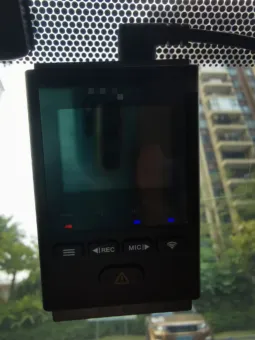
dash cams play a crucial role in modern transportation, and the quality of the video they record directly affects the application of accident determination, road condition analysis and other aspects. Among the many factors that affect the video quality of dash cams, WDR (Wide Dynamic Range), HDR (High Dynamic Range), SDR (Standard Dynamic Range), and pixels are a few key technical indicators. A deep understanding of their relationships and how they work together is crucial for enhancing the performance of dash cams and the practicality of recording video.
2. SDR (Standard Dynamic Range) and pixels
SDR is the standard for traditional video display technology, and it can render a relatively narrow range of brightness and limited color depth. Under normal lighting conditions, SDR can better use pixel information to record scenes. For example, on a well-lit road during the day without strong chiaroscuro contrast, the number of pixels a dash cam determines the level of detail it can record. SDR dash cams with higher pixels, such as those with 1080P (1920×1080 pixels) or even higher 2K (2560×1440 pixels) resolution, can clearly record information such as road conditions in front of the vehicle, the shape of surrounding vehicles, and traffic signs. Each pixel is like a small information collection point, and the more pixels, the richer the details are collected.
(2) Pixel limitations and supplements to SDRs
However, due to the limited dynamic range of SDR, the pixel advantage does not fully compensate for its shortcomings when encountering scenes with complex lighting conditions. In strong light scenes, such as when the vehicle is driving facing the sun or is directly illuminated by the high beams of the vehicle behind, even if the pixels are very high, the SDR dash cam may overexpose the bright parts, resulting in a white highlight area in the picture, making it impossible to distinguish details. In low-light or nighttime scenes, SDR can darken dark areas due to low dynamic range, making it difficult to see details of pedestrians, non-motorized vehicles, or road edges on both sides of the road despite the presence of pixels, because pixels are only units that record information, and SDRs cannot provide enough brightness and color information to fill these pixels to present a clear image.
3. HDR (High Dynamic Range) and pixels
HDR is designed to push the limitations of SDR, capturing and presenting a wider range of brightness and richer color information. It preserves the details of the highlights and shadows in the final video by compositing images with different exposure levels or special signal processing. In this process, the role of pixels cannot be ignored. High pixels provide a richer raw data base for HDR. For example, when shooting a scene with both bright skies and dark ground scenes, high pixels can more accurately capture details such as the texture of clouds in the sky and the contours of ground objects, and then HDR technology uses this pixel information from different exposure images to consolidate it. Taking a 4K (3840×2160 pixel) resolution dash cam with HDR function as an example, its numerous pixels can better restore various details in the scene during HDR processing, whether it is the highlights of the highlights or the shadow areas of the dark, it can be recombined and optimized through the recombination and optimization of pixel information to present a clear and layered image.
(2) HDR and pixel synergy
HDR and pixels work together to greatly improve the recording ability of the dash cam in complex lighting conditions. When driving at night, high-pixel combined with HDR technology can clearly record information such as buildings, vehicles, and pedestrians on both sides of the road. Even when there are street lights or oncoming vehicle lights, HDR can adjust the brightness and color of different pixel areas to avoid halos and glare, while high pixels ensure that sufficient details can still be recorded in this complex light environment, such as the license plate number of distant vehicles and the clothing characteristics of pedestrians on the roadside. In daytime bright light scenes, HDR uses pixel information to prevent overexposure of highlights, while also allowing pixels in the dark to present more details, such as the moment of entering and exiting the tunnel, it can clearly record the texture of the walls in the tunnel and the traffic signs on the road outside the tunnel, etc., while high pixels make these details more delicate and realistic.
4. The relationship between WDR (wide dynamic range) and pixels and other technologies
(1) How WDR works
WDR technology has similarities with HDR in that it also balances the bright and dark areas in the frame. WDR is typically achieved by weighting images with different exposure times. In this process, pixels are also the basic elements that build the image. For example, in a scene where both a strong light source (such as direct sunlight or strong light reflections) and a low-light area (such as a shadowed area), the dash cam's pixels record raw image data at different exposures, which WDR technology processes according to preset algorithms. Adjust the possible over-brightness of pixels in the bright area and the darkness of the dark area, so that the brightness and contrast of the whole picture are in a more appropriate range.
(2) Advantages of WDR
WDR is its relatively fast processing speed, allowing you to quickly adjust the frame in scenes where lighting changes are frequent but contrast is not particularly extreme. For example, when vehicles frequently shuttle between direct sunlight areas and building shadow areas on urban roads, WDR can efficiently use pixel information to adjust the brightness of different pixel areas in real time to ensure the coherence and clarity of the picture, without obvious flickering or delay, so that drivers can watch the recorded picture more smoothly, and can effectively improve the video quality in general daily driving scenarios, and achieve preliminary optimization of light with relatively simple technical means.
> (3) Disadvantages of WDR
> (4) Advantages of HDR
HDR is that it can handle extremely high-contrast light scenes, through the deep compositing and processing of multiple frames of images with different exposures, it can show rich details in the dark areas while not exposing the highlights, and the color reproduction is also higher. In extreme light conditions, such as sunrise and sunset at the beach, or at night when shooting scenes with strong lighting effects, HDR can produce visually stunning video images with natural transitions between highlights and shadows in the frame, and details are clearly visible, providing excellent ability to record special scenes.
> (5) Disadvantages of HDR
disadvantage of HDR is that its processing process is relatively complex and requires more computing resources and time. This can lead to recording delays or untimely response in fast-changing lighting scenes on some dash cam devices if the processor is not powerful enough. For example, when suddenly entering a bright light area during high-speed driving, HDR may take a short time to adjust the picture, and during this time, the picture may freeze or blur for a short time.
(6) Difference and function between WDR and HDR
The main difference between WDR and HDR is the ability to adjust the dynamic range and the complexity of processing. WDR focuses more on quick adjustments in general complex lighting scenes to maintain the basic balance and smoothness of the picture, and is suitable for most daily driving lighting changes. HDR, on the other hand, focuses on deep optimization of high-contrast extreme light scenes to achieve ultimate visual effects and detail reproduction, but requires higher device performance. In a dash cam, the two can complement each other. In scenes with mild light changes, WDR plays a major role in ensuring the efficiency and stability of video recording. When encountering special scenes with extremely high light contrast, HDR further improves the picture quality on the basis of WDR, providing better video material for recording important moments.
5. Comprehensive application and practical effect
in the actual driving recording process, SDR, as the basic video recording technology, can meet the basic needs in simple lighting environments, but in complex lighting scenarios, it needs to rely on WDR, HDR technology and appropriate pixel configuration to improve video quality. For example, in daily urban road driving, the light conditions are relatively stable most of the time, and the SDR dash cam can work normally, but when encountering special circumstances, such as suddenly entering a high-light area or passing through a road section with complex lighting at night, a dash cam with WDR or HDR function and reasonable pixels can play its advantages. Taking a night traffic accident as an example, if the dash cam only supports SDR, it may not be able to clearly record all the details of the moment of the accident, because the light is complex at night, and it is difficult for SDR to take into account both bright parts (such as street lights, car lights) and dark parts (such as shadowed areas around the accident vehicle). If it is a dash cam with HDR function and high pixels, it can clearly record the entire picture of the accident scene, including the location of the vehicle's collision, traffic facilities in the surrounding environment, pedestrians and other information, providing strong evidence for determining accident liability.
6. Conclusion
in dash cams, SDR is the foundation, and pixels play a role in recording details in simple light scenes within its framework. WDR and HDR are important technical means to deal with complex lighting environments, and they work with pixels to synergize with each other. High pixels provide richer raw data for WDR and HDR, which quickly adjusts the picture in generally complex lighting scenarios, and HDR deeply optimizes video quality in high-contrast extreme light scenes. The good cooperation between the three can enable the dash cam to record clear, detailed, and balanced light and dark parts in various light conditions, so as to better meet the multi-faceted needs of driving records in modern transportation, protect the rights and interests of car owners, and provide reliable video data for traffic management and other related work.
標籤: dash cam pixels HDR light WDR
上一篇
A complete guide to the purchase of a dash cam: a multi-dimensional in-depth analysis
下一篇system prompts successful upload of articles, but they are not stored in the database
相關文章
- 詳細閱讀
- 詳細閱讀
- 詳細閱讀
- 詳細閱讀
- 詳細閱讀
-
適合窮人翻身的10個行業:汽車美容與飾品店詳細閱讀

在總結中,汽車美容行業確實是適合窮人翻身的10個行業之一,無論是前景、特色、營銷策略、差異化,還是進貨、細分生意等方面,都需要創新和市場洞察,並且避免...
2023-04-20 1.1K+ 汽車美容 市場營銷 適合窮人翻身的10個行業
-
適合窮人翻身的10個行業,本小利大行業詳細閱讀

窮人想翻身不容易,但是有這樣10個適合窮人的行業門檻低、投資少,Entrepreneurship 難度小。隨著電商的發展,同城配送逐漸成為市場上的重要行業之一。餐飲是市場上不斷增長...
2023-04-04 1.3K+ 市場營銷 適合窮人翻身的10個行業
- 詳細閱讀