

1. Introductiondash cams play a crucial role in modern transportation, and...
Dash cam HDR vs. SDR: full analysis of functions, differences and applications
汽車
2024年12月16日 08:19 564
Pinwu
一. Introduction
today, as dashcam technology continues to evolve, HDR (High Dynamic Range) and SDR (Standard Dynamic Range) have become two important concepts. They have different performance in terms of video recording quality, which directly affects the clarity, color reproduction, and detail presentation ability of the video recorded by the dash cam, which in turn is related to the effectiveness of accident determination and road condition recording. Understanding the features and differences between HDR and SDR is crucial for choosing the right dashcam and interpreting dash cams correctly.
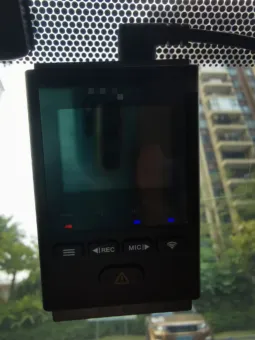
二. SDR (Standard Dynamic Range)
(1) Basic concepts
SDR is a traditional video display technology standard that has been widely used in various video devices for a long time, including early dash cams. SDRs are capable of delivering a relatively narrow range of brightness and limited color depth.
(2) How it works
SDR processes and records video signals based on fixed brightness and color standards. In an environment with more uniform and moderate lighting conditions, it can better record scene information. For example, on roads with sufficient light during the day and no strong chiaroscuro contrast, SDR dash cams can clearly record the road conditions in front of the vehicle, the shape of surrounding vehicles, and traffic signs. However, when encountering scenes with complex lighting conditions, its limitations gradually become apparent.
(3) Limitations
in strong light scenes, such as when the vehicle is driving facing the sun or is directly illuminated by the high beams of the vehicle behind, the SDR dash cam may have overexposed bright parts, resulting in a white highlight area in the picture, making it impossible to distinguish details, and the license plate number may be completely lost under strong light. In low light or night scenes, due to its limited dynamic range, the dark areas will become dark, making it difficult to see the details of pedestrians, non-motor vehicles or road edges on both sides of the road, which is extremely detrimental to the recording and analysis of driving safety accidents at night.
三. HDR (High Dynamic Range)
(1) Basic concepts
HDR is designed to push the limitations of SDR, capturing and presenting a wider range of brightness and richer color information. It preserves the details of the highlights and shadows in the final video by compositing images with different exposure levels or special signal processing.
(2) How it works
HDR dashcam works, it will quickly take multiple photos with different exposure parameters, such as a photo with normal exposure for bright areas, a photo with normal exposure for dark areas, and a photo with some intermediate exposure levels. Then, the image processing algorithm is used to integrate the effective information in these photos, extract the image information with not exposed highlights and detailed dark parts, and fuse them into a video. In this way, when facing strong light scenes, such as the moment of entering and exiting the tunnel or at night with strong light interference, HDR technology can suppress the overexposure of bright areas, so that the details of bright objects such as the sky and street lamps can be preserved; In low-light environments, it can also brighten dark areas, so that the shadows of the road and objects on the side of the road at night are clearly visible, such as the outline of vehicles parked on the side of the road at night, the location of pedestrians and non-motor vehicles, etc.
(3) Advantages
HDR significantly improves the visual quality of video, providing a clearer and more realistic picture, whether in complex lighting conditions during the day or when driving at night. This is of great help in accurately recording various details during driving, including the location of the vehicle at the moment of the accident, the angle of the collision, the surrounding environment, etc., and can provide more convincing evidence in insurance claims, traffic dispute resolution, etc.
四. The difference between HDR and SDR
(1) Brightness dynamic range
1. SDRs have a narrow dynamic range of brightness, often only able to handle limited brightness variations, and are prone to loss of detail when facing high-contrast scenes. For example, in a road scene with both bright sunlight and dark shade, SDR may only ensure that some areas are properly bright, while others are too bright or too dark.
2. HDR has a much wider brightness dynamic range, allowing for both bright and dark details. In these scenes, HDR is able to clearly show the texture of the road in the sunlit area, as well as information about vehicles and pedestrians in the shade.
(2) Color expression
1. SDR's color depth and gamut are relatively limited, and it can be difficult to reproduce scenes with bright colors or rich color transitions. For example, when shooting a gorgeous sunset in the evening sky, SDR may not accurately capture the rich color layers of the sunset, and the colors will appear flat and monotonous.
2. HDR has a more vivid and realistic color performance due to its ability to capture richer color information. For sunset scenes, HDR can delicately restore the transitions and changes of colors from orange-red to fuchsia, making the picture closer to what the human eye actually sees.
(3) Detail presentation
1. In terms of detail rendering, SDR is prone to loss of detail in complex lighting scenes, especially in areas where highlights are overexposed and dark areas are underexposed. For example, when shooting a street scene with a light sign at night, SDR may make the light sign too bright to see the text on it, and it will be difficult to distinguish objects in the dark part of the street.
2. HDR preserves more detail in both highlights and shadows through its special image processing. In the same night street scene, HDR can make the text of the light sign clearly legible, and objects such as trash cans and telephone poles in the dark of the street can also be clearly recorded.
五. Comparison of application scenarios and actual effects
(1) Daytime bright light scenes
1. When the SDR dash cam encounters strong light during the day, such as direct sunlight or strong light reflection, the sky in the picture, the reflective area of buildings, etc. will be overexposed, and some small details on the road, such as slight damage or pebbles on the road, may be covered.
2. The HDR dash cam can well balance the brightness of the sky and the ground, the blue of the sky is still vivid and the details of the clouds are visible, the road details on the ground, traffic markings and the characteristics of the surrounding vehicles can be clearly presented, and even the reflective area of the vehicle's chrome trim strips will not have a large area of white overexposure.
(2) Low light scene at night
1. When SDR dash cams record at night, areas on both sides of the road without street lights will be dark, and only limited information can be seen within the illuminated range of the lights. For distant vehicles, pedestrians or roadside obstacles, it is difficult to detect in advance in the picture, and there are great safety hazards. Moreover, when there are street lights or oncoming vehicle lights, halos and glare are easy to occur, which further affects the clarity of the picture.
2. HDR dash cams can effectively brighten dark areas at night, making the environment on both sides of the road more informative and able to detect potential hazards in advance. It also has a good suppression effect on the glare of street lights and car lights, ensuring the clarity and stability of the picture, such as the license plate number of vehicles parked on the side of the road and small animals that suddenly jump out from the roadside.
六. Conclusion
there is a clear difference between HDR and SDR in the application of dash cams. As a traditional video recording technology, SDR can meet the basic needs of driving recording in simple lighting environments, but it has many limitations in complex lighting scenarios. HDR, with its wider dynamic range, better color performance and detail rendering capabilities, can provide high-quality video recording in various lighting conditions, especially in bright and low-light scenes, which can provide more reliable and valuable video data for driving safety recording and accident handling. With the continuous development of technology, HDR dash cams are expected to gradually become the mainstream of the market, providing a better driving recording experience for the majority of car owners.
標籤: dash cam scene SDR HDR recorder
上一篇
What is the difference between dash cam, 2560*1440 30fps and 1920*1080 60fps, how to choose, and which mode is better
下一篇A complete guide to the purchase of a dash cam: a multi-dimensional in-depth analysis
相關文章
- 詳細閱讀
- 詳細閱讀
- 詳細閱讀
- 詳細閱讀
- 詳細閱讀
-
適合窮人翻身的10個行業:汽車美容與飾品店詳細閱讀

在總結中,汽車美容行業確實是適合窮人翻身的10個行業之一,無論是前景、特色、營銷策略、差異化,還是進貨、細分生意等方面,都需要創新和市場洞察,並且避免...
2023-04-20 1.1K+ 汽車美容 市場營銷 適合窮人翻身的10個行業
-
適合窮人翻身的10個行業,本小利大行業詳細閱讀

窮人想翻身不容易,但是有這樣10個適合窮人的行業門檻低、投資少,Entrepreneurship 難度小。隨著電商的發展,同城配送逐漸成為市場上的重要行業之一。餐飲是市場上不斷增長...
2023-04-04 1.3K+ 市場營銷 適合窮人翻身的10個行業
- 詳細閱讀